How to Start Your Own Skincare Brand Without Manufacturing Products
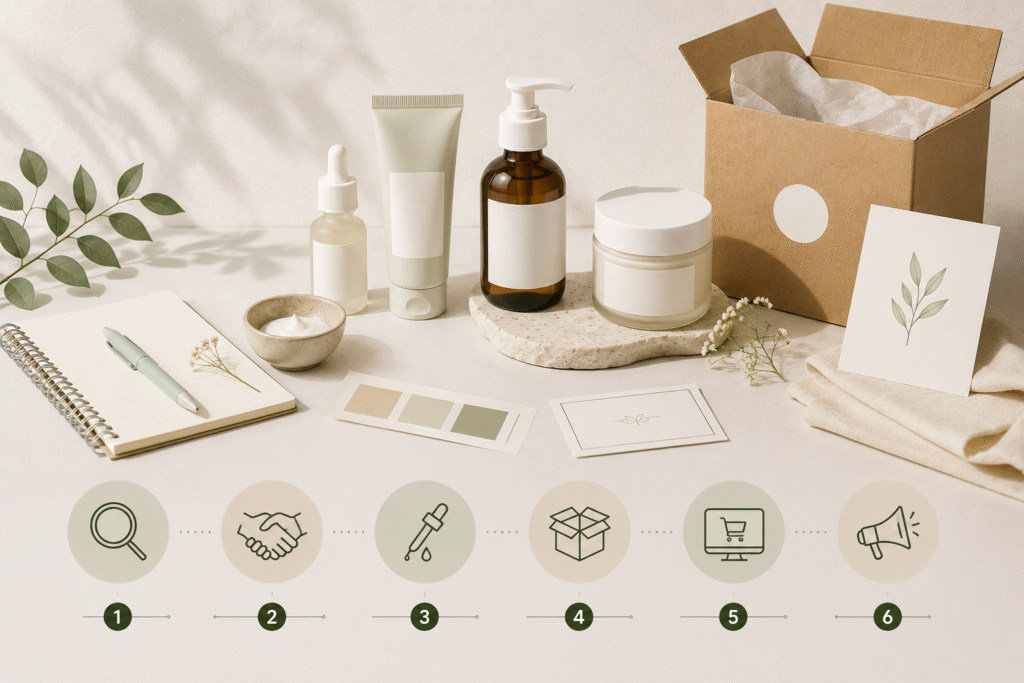
Starting a skincare brand sounds expensive and complicated — but it doesn’t have to be. Most people assume you need a lab, chemists, and hundreds of thousands of dollars to bring a beauty product to market. The truth is, thousands of successful skincare brands never manufactured a single product themselves.
Here’s how it actually works.
You don’t need to make the product — you need to sell it
The beauty industry runs on a model called private label manufacturing. A manufacturer creates the product, you put your brand on it, and you sell it. This is how a huge number of brands on Etsy, Amazon, and in boutiques across the country got started.
Your job is to find the right products, build a brand around them, and get them in front of the right customers.
What private label means for skincare
Private label means a manufacturer already has a proven formula — a soap, a facial oil, a bath bomb — and you license it under your own brand name. You choose the product, customize the packaging and label, and sell it as your own line.
This approach has several real advantages. You skip the years of R&D. You skip the regulatory headaches of developing a new formula from scratch. And you start selling much faster — sometimes within weeks.
What you actually need to get started
To launch a skincare brand without manufacturing, you need three things:
A product that works. Find a manufacturer whose formulas you believe in. Order samples. Use the products yourself. If you wouldn’t use it, don’t sell it.
A brand identity. Your name, your story, your packaging. This is what makes customers choose you over everyone else. Natural ingredients, handmade process, sustainable values — whatever is true about your products, lead with that.
A sales channel. Where will you sell? A wholesale account with spas and boutiques, your own website, Amazon, Etsy, or all of the above. Start with one and expand from there.
The handmade advantage
Mass-produced skincare is everywhere. What’s harder to find — and what customers increasingly want — is something small-batch, handcrafted, and made with real ingredients. If your manufacturer makes products by hand in small batches, that’s a genuine selling point. Use it.
Handmade products also allow for more flexibility. You can offer seasonal scents, limited runs, and custom formulations that big brands simply can’t do.
Starting small is smart
One of the biggest mistakes new beauty brand owners make is trying to launch with 20 products. Start with two or three that you can genuinely stand behind. Master those, build your customer base, then expand.
With the right manufacturing partner, you can place your first wholesale order for a few hundred dollars, test the market, and scale from there — without the risk of a massive upfront investment.
The bottom line
You don’t need a manufacturing facility to start a skincare brand. You need a clear vision, the right products, and a manufacturing partner you trust. The rest is marketing, relationships, and consistency.
At Relaxcation, we’ve been making handmade natural soaps, bath bombs, facial oils, and wellness products in small batches since 2016. We work with boutiques, spas, and brand owners who want quality products they can be proud to put their name on.
0 Comments