How Private Label Skincare Works
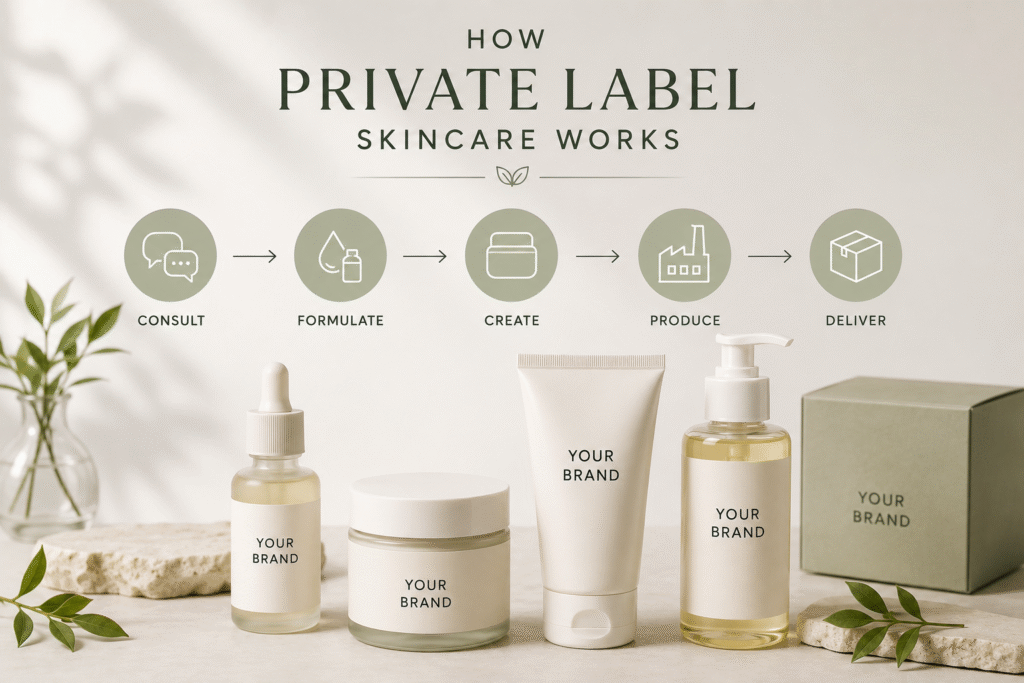
Private label is one of the most misunderstood terms in the beauty industry. Some people think it means cheap knockoffs. Others think it’s only for big corporations. Neither is true.
Private label skincare is simply a product made by one company and sold under another company’s brand. It’s how a huge portion of the beauty products you see in boutiques, spas, and online stores actually get made.
The basic model
A manufacturer develops and produces a product — a soap bar, a facial oil, a bath bomb. They’ve already done the formulation work, tested the product, and figured out how to make it consistently at scale.
You come in as a brand owner. You choose the product, put your label on it, and sell it as part of your line. The manufacturer handles production. You handle branding, marketing, and sales.
That’s it. That’s private label.
What you’re actually buying
When you place a private label order, you’re buying more than the physical product. You’re buying years of formulation experience, tested manufacturing processes, ingredient sourcing relationships, and compliance work that the manufacturer has already done.
A good private label manufacturer has already figured out what works. Your job is to find one whose products you genuinely believe in, and build your brand around them.
How it’s different from white label
These terms are often used interchangeably, but there’s a subtle difference. White label typically means a completely generic, unbranded product that many different companies sell. Private label usually implies a closer relationship — sometimes with the ability to customize scents, packaging, or formulations.
At the small-batch, handmade level, private label often means working directly with the manufacturer to find the right fit for your brand rather than just picking from a catalog.
What customization is possible
This varies by manufacturer. At minimum, most private label arrangements include your own label and branding on the product. More advanced options can include custom scent blends, packaging choices, seasonal variations, or even modifications to the base formula.
If you’re just starting out, begin with the product as-is and focus on building your brand. Customization can come later once you know what your customers actually want.
Who uses private label skincare
Spa owners who want a signature product line without the overhead of manufacturing. Boutique owners who want exclusive products their customers can’t find on Amazon. Online sellers building a beauty brand from scratch. Estheticians who want to offer retail products that align with their services.
The common thread is that these are people who are great at serving customers and building relationships — not chemists or factory operators. Private label lets them stay in their lane.
What to look for in a private label partner
Not all manufacturers are equal. Look for transparency about ingredients, small-batch production for freshness, cruelty-free and vegan certifications if that matters to your brand, and a track record of working with small businesses.
Ask to see samples before committing. A manufacturer who believes in their product will always say yes.
The bottom line
Private label skincare isn’t a shortcut — it’s a smart division of labor. You focus on what you’re good at. Your manufacturer focuses on what they’re good at. The result is a better product and a stronger business.
Relaxcation has been producing handmade natural skincare and bath products in small batches since 2016. We work with boutiques, spas, and brand owners across the US who want quality products they can stand behind.
0 Comments