Private Label vs Custom Formulation: What’s the Difference?
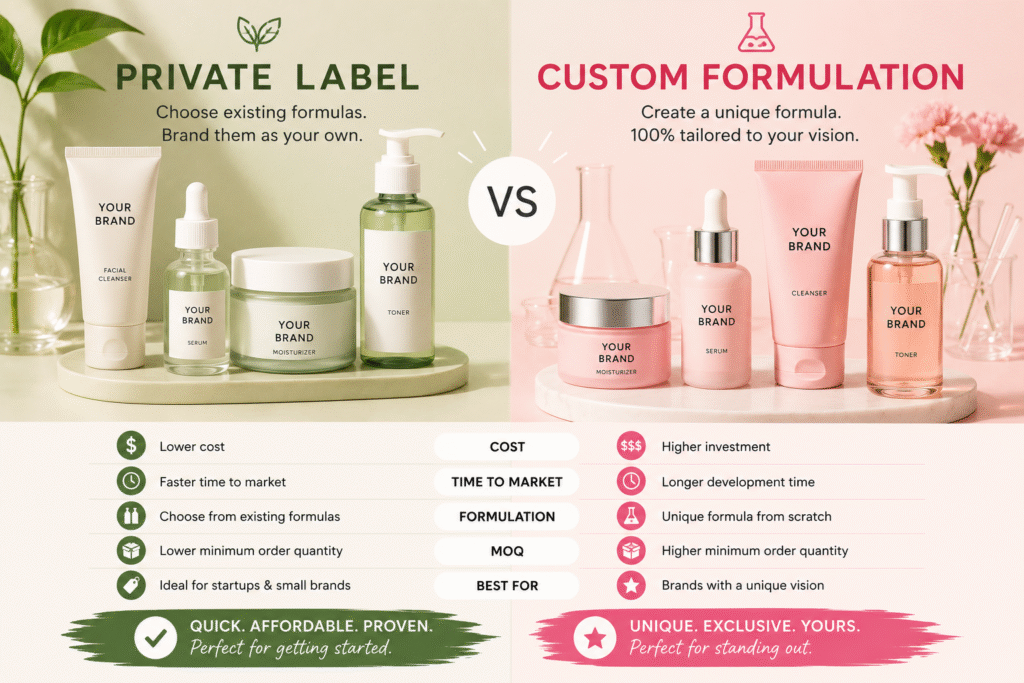
If you’re thinking about launching a beauty brand, you’ll run into these two terms pretty quickly. Private label and custom formulation are both legitimate paths — but they’re very different in terms of cost, time, and risk. Understanding the difference will save you a lot of money and frustration.
Private label: start with what works
Private label means you’re working with formulas that already exist. The manufacturer has developed and tested the product. You choose it, brand it, and sell it.
The advantages are significant. You can get to market in weeks rather than years. Your upfront costs are a fraction of what custom formulation requires. And you’re starting with a product that already works — the formula has been tested, the manufacturing process is dialed in, and the ingredient sourcing is established.
The tradeoff is that other brands can theoretically sell the same base formula. Your differentiation comes from your brand, your story, your packaging, and how you position the product — not from a unique formula.
Custom formulation: build from scratch
Custom formulation means developing a completely new product from the ground up. You work with a cosmetic chemist or a manufacturer with an R&D team to create a formula that doesn’t exist yet.
This can produce something genuinely unique. But the process is long, expensive, and unpredictable. Expect to spend anywhere from $5,000 to $50,000 or more on formulation alone, before you’ve produced a single unit for sale. Development can take 12 to 24 months. And there’s no guarantee the final product will perform the way you hoped.
Custom formulation makes sense when you have a specific, proven gap in the market, significant capital, and the patience to wait. For most people launching their first beauty brand, it’s the wrong place to start.
The hybrid approach
Many successful brands start with private label and move toward customization over time. You launch with proven products, build your customer base, generate revenue, and then use that foundation to invest in custom development once you actually know what your customers want.
This is the lower-risk path. You’re not betting everything on a formula before you’ve proven your ability to sell.
What actually makes a brand stand out
Here’s something the beauty industry doesn’t talk about enough: most customers don’t know or care whether a product is private label or custom formulated. What they care about is whether the product works, whether they trust the brand, and whether it aligns with their values.
A private label soap made with real botanical ingredients, sold by a brand with a compelling story and beautiful packaging, will outsell a mediocre custom formula from a brand nobody’s heard of every single time.
The brand is the product, in a way that matters to consumers.
Questions to ask yourself
Before deciding which path is right for you, ask: How quickly do I need to get to market? What’s my budget for product development? Do I have existing customers I can test with? Is there a specific formula gap I’m trying to fill, or am I building a brand around a lifestyle and aesthetic?
If you answered “quickly,” “limited,” “not yet,” and “lifestyle” — private label is almost certainly the right starting point.
The bottom line
Custom formulation is powerful but demanding. Private label is practical and proven. For most new beauty brand owners, the goal should be launching a great brand, not reinventing a formula. Get your brand right first. The product can evolve from there.
Relaxcation offers private label partnership for boutiques, spas, and brand owners who want handmade, natural products they can sell under their own name. We’ve been making small-batch bath and skincare products since 2016.
0 Comments