How Much Does It Cost to Start a Skincare Brand?

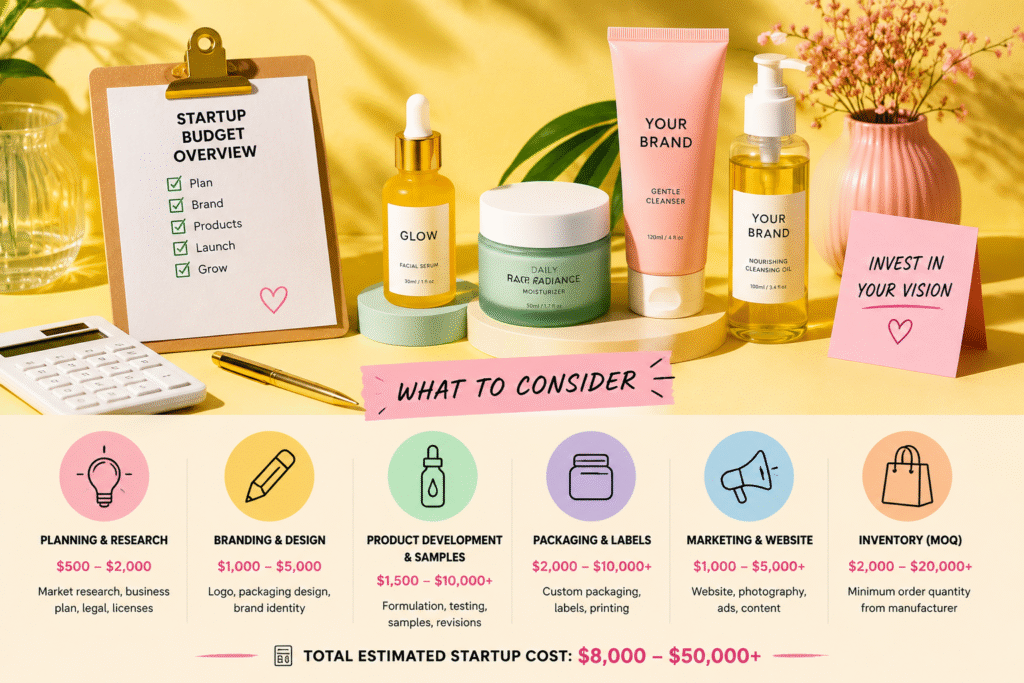
Starting a skincare or beauty business can cost anywhere from a few hundred dollars to tens of thousands. The difference comes down to one important decision: are you creating products from scratch, building your own private label, or starting with proven wholesale products?

The good news is that you don’t need a huge budget to enter the beauty market.

The Three Ways to Start a Beauty Brand

Before investing in products, packaging, and marketing, it helps to understand the different paths available.

1. Custom Formulation

Creating your own original skincare formula is the most expensive option.

You may need to invest in:

  • Cosmetic chemist and formulation fees
  • Product development
  • Stability and safety testing
  • Regulatory requirements
  • Packaging development
  • Product samples
  • Minimum manufacturing quantities

Depending on the products and manufacturer, developing a completely new formula can require tens of thousands of dollars before you sell your first product.

This approach makes sense for established businesses that already have customers and want to develop something truly unique.

For a new business, however, it can be a significant financial risk.

2. Private Label

Private label is a more affordable way to create a beauty brand because you start with an existing product formula rather than developing everything from scratch.

You can still build your own brand identity, packaging, and customer experience, but you’ll need to budget for:

  • Initial inventory
  • Labels and packaging
  • Branding and design
  • Website or online store
  • Product photography
  • Marketing
  • Samples
  • Shipping

A small private-label launch can still require $1,000–$5,000 or more, depending on the number of products and the level of branding you want.

For some businesses, this is the right long-term strategy.

But there is another option that requires much less upfront investment.

3. Start with Wholesale Products

If your goal is to enter the beauty market, test products, or start selling without investing thousands of dollars into product development, wholesale can be the simplest way to begin.

With a wholesale model, you don’t have to create formulas, manufacture products, or develop a product line from scratch.

You purchase finished products from an established manufacturer and sell them through your own retail business, boutique, spa, salon, gift shop, or online store.

Start with Relaxcation Wholesale

Relaxcation offers handmade bath and beauty products produced in small batches in the USA.

Our wholesale collection includes:

  • Handmade Bath Bombs
  • Bath Bombs with Toys Inside
  • Natural Soaps
  • Face Oils & Serums
  • Shampoo & Conditioner Bars
  • Shower Steamers
  • Soy Wax Candles
  • Gift Baskets
  • Other natural bath and body products

This allows you to start with a real product assortment without the cost and complexity of developing your own formulas.

How Much Do You Need to Start?

With Relaxcation Wholesale, your first order can start at $300.

That means you can test the market with a relatively small investment instead of committing thousands of dollars to product development and manufacturing.

You can start with a small selection of products, see what your customers respond to, and then increase your inventory based on actual sales.

This is especially useful for:

  • New beauty businesses
  • Gift shops
  • Boutiques
  • Spas and salons
  • Online stores
  • Specialty retailers
  • Entrepreneurs testing a new product category

What Are You Actually Paying For?

When you develop your own products, a significant part of your budget goes toward creating and testing the product before you know whether customers will buy it.

With wholesale, your money goes directly toward inventory that is ready to sell.

Instead of spending your first $5,000 on formulation, testing, packaging development, and minimum production runs, you can start smaller and use the rest of your budget for things that actually help you sell:

Inventory → Website → Marketing → Photography → Customer Acquisition

You can then reinvest your profits into expanding your product selection.

The Smart Way to Start Small

You don’t have to launch with 20 different products.

A smarter approach can be to start with a small selection of products that fit your target customer.

For example, a boutique could start with:

  • A selection of best-selling bath bombs
  • A few natural soaps
  • Face oils or serums
  • Giftable products

Then track which products sell fastest and build your next order around what your customers actually want.

This reduces your risk and gives you real market feedback before making a larger investment.

When Does It Make Sense to Create Your Own Brand?

Starting with wholesale doesn’t mean you can never create your own brand.

In fact, wholesale can be a great way to learn what your customers want first.

Once you have consistent sales, repeat customers, and a better understanding of your market, you can decide whether investing in private label or custom formulation makes sense for your business.

Start with what works. Scale when the demand is there.

The Bottom Line

You don’t need $10,000 or $50,000 to enter the beauty market.

If your goal is to test the market, start selling beauty products, or add a profitable bath and body category to your existing business, wholesale can be a much lower-risk alternative to developing your own products from scratch.

With Relaxcation Wholesale, you can start with an initial order from $300, choose from a wide selection of handmade bath and beauty products, and begin selling without the cost and complexity of developing your own formulas.

Why spend thousands creating a product before you know if it will sell? Start with products that are already made, ready to sell, and designed for retail.

Ready to Start?

Explore the Relaxcation Wholesale collection and find products for your store, spa, boutique, or online business.
[Shop Relaxcation Wholesale →]

By Natalia, ago

Private Label vs Custom Formulation: What’s the Difference?

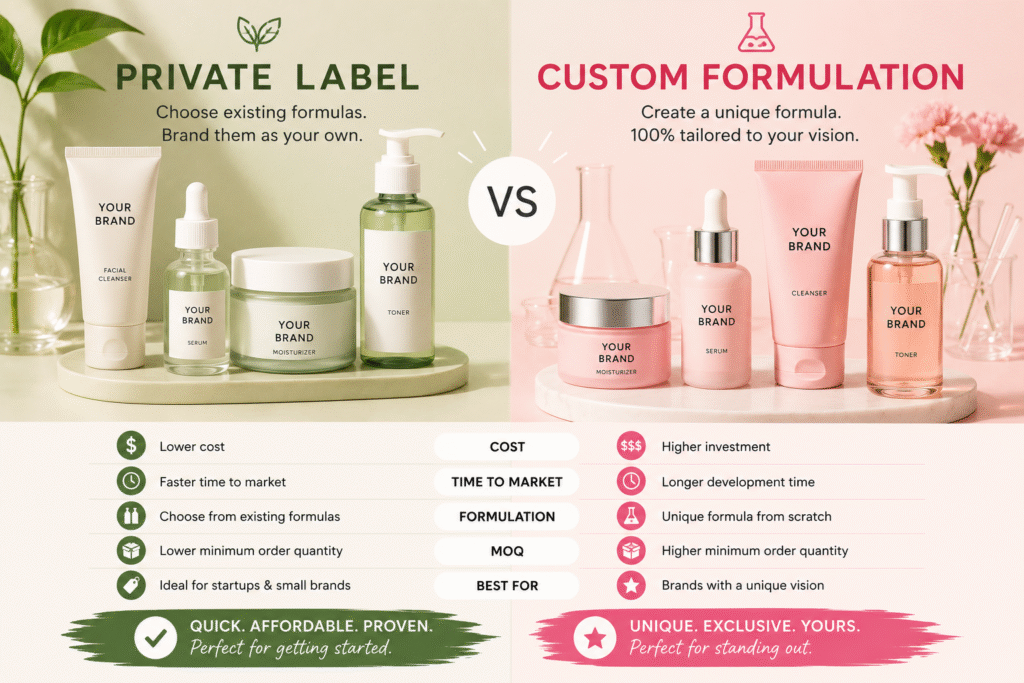
If you’re thinking about launching a beauty brand, you’ll run into these two terms pretty quickly. Private label and custom formulation are both legitimate paths — but they’re very different in terms of cost, time, and risk. Understanding the difference will save you a lot of money and frustration.

Private label: start with what works

Private label means you’re working with formulas that already exist. The manufacturer has developed and tested the product. You choose it, brand it, and sell it.

The advantages are significant. You can get to market in weeks rather than years. Your upfront costs are a fraction of what custom formulation requires. And you’re starting with a product that already works — the formula has been tested, the manufacturing process is dialed in, and the ingredient sourcing is established.

The tradeoff is that other brands can theoretically sell the same base formula. Your differentiation comes from your brand, your story, your packaging, and how you position the product — not from a unique formula.

Custom formulation: build from scratch

Custom formulation means developing a completely new product from the ground up. You work with a cosmetic chemist or a manufacturer with an R&D team to create a formula that doesn’t exist yet.

This can produce something genuinely unique. But the process is long, expensive, and unpredictable. Expect to spend anywhere from $5,000 to $50,000 or more on formulation alone, before you’ve produced a single unit for sale. Development can take 12 to 24 months. And there’s no guarantee the final product will perform the way you hoped.

Custom formulation makes sense when you have a specific, proven gap in the market, significant capital, and the patience to wait. For most people launching their first beauty brand, it’s the wrong place to start.

The hybrid approach

Many successful brands start with private label and move toward customization over time. You launch with proven products, build your customer base, generate revenue, and then use that foundation to invest in custom development once you actually know what your customers want.

This is the lower-risk path. You’re not betting everything on a formula before you’ve proven your ability to sell.

What actually makes a brand stand out

Here’s something the beauty industry doesn’t talk about enough: most customers don’t know or care whether a product is private label or custom formulated. What they care about is whether the product works, whether they trust the brand, and whether it aligns with their values.

A private label soap made with real botanical ingredients, sold by a brand with a compelling story and beautiful packaging, will outsell a mediocre custom formula from a brand nobody’s heard of every single time.

The brand is the product, in a way that matters to consumers.

Questions to ask yourself

Before deciding which path is right for you, ask: How quickly do I need to get to market? What’s my budget for product development? Do I have existing customers I can test with? Is there a specific formula gap I’m trying to fill, or am I building a brand around a lifestyle and aesthetic?

If you answered “quickly,” “limited,” “not yet,” and “lifestyle” — private label is almost certainly the right starting point.

The bottom line

Custom formulation is powerful but demanding. Private label is practical and proven. For most new beauty brand owners, the goal should be launching a great brand, not reinventing a formula. Get your brand right first. The product can evolve from there.

Relaxcation offers private label partnership for boutiques, spas, and brand owners who want handmade, natural products they can sell under their own name. We’ve been making small-batch bath and skincare products since 2016.

Explore private label options →

By Natalia, ago

How Private Label Skincare Works

Private label is one of the most misunderstood terms in the beauty industry. Some people think it means cheap knockoffs. Others think it’s only for big corporations. Neither is true.

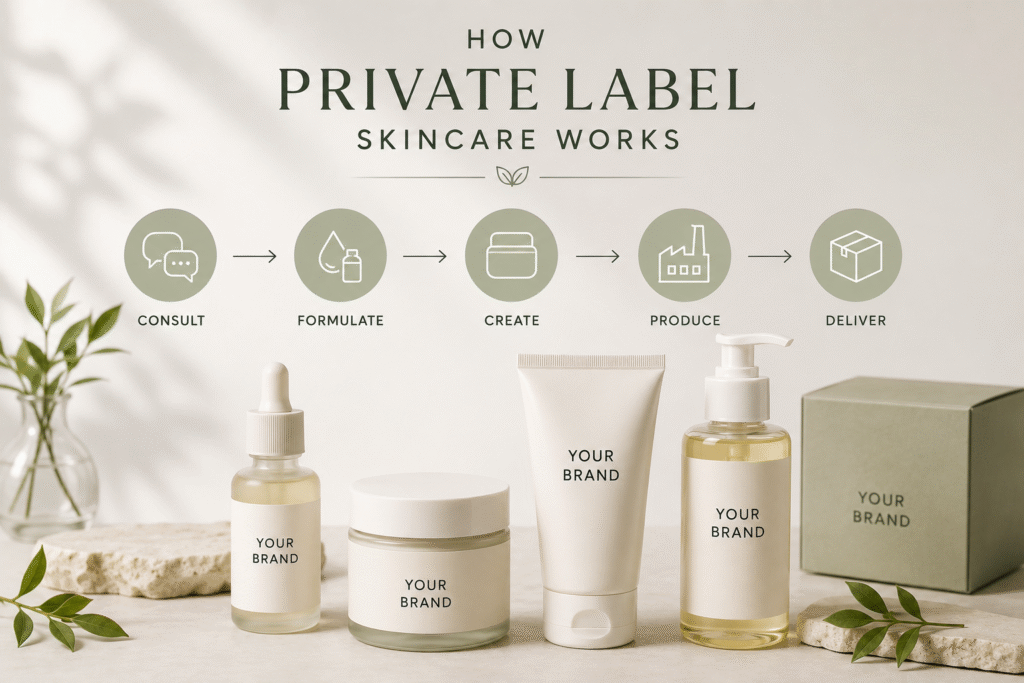
Private label skincare is simply a product made by one company and sold under another company’s brand. It’s how a huge portion of the beauty products you see in boutiques, spas, and online stores actually get made.

The basic model

A manufacturer develops and produces a product — a soap bar, a facial oil, a bath bomb. They’ve already done the formulation work, tested the product, and figured out how to make it consistently at scale.

You come in as a brand owner. You choose the product, put your label on it, and sell it as part of your line. The manufacturer handles production. You handle branding, marketing, and sales.

That’s it. That’s private label.

What you’re actually buying

When you place a private label order, you’re buying more than the physical product. You’re buying years of formulation experience, tested manufacturing processes, ingredient sourcing relationships, and compliance work that the manufacturer has already done.

A good private label manufacturer has already figured out what works. Your job is to find one whose products you genuinely believe in, and build your brand around them.

How it’s different from white label

These terms are often used interchangeably, but there’s a subtle difference. White label typically means a completely generic, unbranded product that many different companies sell. Private label usually implies a closer relationship — sometimes with the ability to customize scents, packaging, or formulations.

At the small-batch, handmade level, private label often means working directly with the manufacturer to find the right fit for your brand rather than just picking from a catalog.

What customization is possible

This varies by manufacturer. At minimum, most private label arrangements include your own label and branding on the product. More advanced options can include custom scent blends, packaging choices, seasonal variations, or even modifications to the base formula.

If you’re just starting out, begin with the product as-is and focus on building your brand. Customization can come later once you know what your customers actually want.

Who uses private label skincare

Spa owners who want a signature product line without the overhead of manufacturing. Boutique owners who want exclusive products their customers can’t find on Amazon. Online sellers building a beauty brand from scratch. Estheticians who want to offer retail products that align with their services.

The common thread is that these are people who are great at serving customers and building relationships — not chemists or factory operators. Private label lets them stay in their lane.

What to look for in a private label partner

Not all manufacturers are equal. Look for transparency about ingredients, small-batch production for freshness, cruelty-free and vegan certifications if that matters to your brand, and a track record of working with small businesses.

Ask to see samples before committing. A manufacturer who believes in their product will always say yes.

The bottom line

Private label skincare isn’t a shortcut — it’s a smart division of labor. You focus on what you’re good at. Your manufacturer focuses on what they’re good at. The result is a better product and a stronger business.

Relaxcation has been producing handmade natural skincare and bath products in small batches since 2016. We work with boutiques, spas, and brand owners across the US who want quality products they can stand behind.

View our wholesale catalog →

By Natalia, ago

How to Start Your Own Skincare Brand Without Manufacturing Products

Starting a skincare brand sounds expensive and complicated — but it doesn’t have to be. Most people assume you need a lab, chemists, and hundreds of thousands of dollars to bring a beauty product to market. The truth is, thousands of successful skincare brands never manufactured a single product themselves.

Here’s how it actually works.

You don’t need to make the product — you need to sell it

The beauty industry runs on a model called private label manufacturing. A manufacturer creates the product, you put your brand on it, and you sell it. This is how a huge number of brands on Etsy, Amazon, and in boutiques across the country got started.

Your job is to find the right products, build a brand around them, and get them in front of the right customers.

What private label means for skincare

Private label means a manufacturer already has a proven formula — a soap, a facial oil, a bath bomb — and you license it under your own brand name. You choose the product, customize the packaging and label, and sell it as your own line.

This approach has several real advantages. You skip the years of R&D. You skip the regulatory headaches of developing a new formula from scratch. And you start selling much faster — sometimes within weeks.

What you actually need to get started

To launch a skincare brand without manufacturing, you need three things:

A product that works. Find a manufacturer whose formulas you believe in. Order samples. Use the products yourself. If you wouldn’t use it, don’t sell it.

A brand identity. Your name, your story, your packaging. This is what makes customers choose you over everyone else. Natural ingredients, handmade process, sustainable values — whatever is true about your products, lead with that.

A sales channel. Where will you sell? A wholesale account with spas and boutiques, your own website, Amazon, Etsy, or all of the above. Start with one and expand from there.

The handmade advantage

Mass-produced skincare is everywhere. What’s harder to find — and what customers increasingly want — is something small-batch, handcrafted, and made with real ingredients. If your manufacturer makes products by hand in small batches, that’s a genuine selling point. Use it.

Handmade products also allow for more flexibility. You can offer seasonal scents, limited runs, and custom formulations that big brands simply can’t do.

Starting small is smart

One of the biggest mistakes new beauty brand owners make is trying to launch with 20 products. Start with two or three that you can genuinely stand behind. Master those, build your customer base, then expand.

With the right manufacturing partner, you can place your first wholesale order for a few hundred dollars, test the market, and scale from there — without the risk of a massive upfront investment.

The bottom line

You don’t need a manufacturing facility to start a skincare brand. You need a clear vision, the right products, and a manufacturing partner you trust. The rest is marketing, relationships, and consistency.

At Relaxcation, we’ve been making handmade natural soaps, bath bombs, facial oils, and wellness products in small batches since 2016. We work with boutiques, spas, and brand owners who want quality products they can be proud to put their name on.

Explore our wholesale catalog →

By Natalia, ago